Your Work Isn't Flopping — Your Timing Is

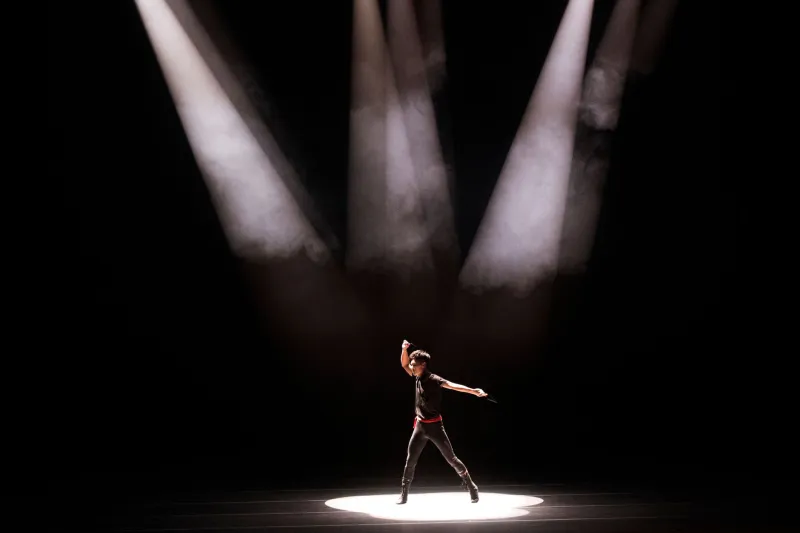
Photo by Photo by Jonas Leupe on Unsplash on Unsplash
You spent three weeks on it. You obsessed over every detail, rewrote the ending twice, stayed up past midnight tweaking the thumbnail. You hit publish on a Tuesday afternoon because — honestly — you just couldn't wait anymore.
And then: nothing.
A handful of views. A couple of likes from people who probably didn't even click through. Your phone stayed quiet. The algorithm yawned.
Here's the thing nobody wants to say out loud: your work might actually be good. The problem isn't the craft. The problem is that you treated distribution like an afterthought — and in 2024, that's a career-ending mistake.
The Myth of the Meritocracy
We've been sold this idea that if the work is good enough, it'll find its audience. That quality rises. That the cream floats to the top.
That's a beautiful story. It's also mostly fiction.
Every platform — YouTube, Instagram, TikTok, Substack, Spotify, wherever you're building — is a firehose of content running 24 hours a day. Your post doesn't get judged in isolation. It gets judged against everything else competing for attention in that same 15-minute window when your audience happens to be scrolling. If your stuff shows up when they're distracted, overwhelmed, or already emotionally spent from three other pieces of content they just consumed, you lose. Not because you're bad. Because you were in the wrong place at the wrong moment.
Timing isn't a soft variable. It's structural.
The Distribution Decisions That Actually Move the Needle
Successful creators — the ones who seem to have that uncanny ability to always "go viral" or always build momentum — aren't just lucky. They've quietly figured out a few things that most people never bother to learn.
They know when their audience is actually awake.
Not when they think their audience is awake. Not what some generic social media guide published in 2021 told them. They've tested, tracked, and built a real picture of when their specific followers are most receptive. A creator building a personal finance audience of 9-to-5 workers in the Midwest has a completely different optimal window than someone speaking to night-shift nurses or college students in the Pacific time zone.
They don't launch into noise — they launch into a gap.
There's a creator named Matt D'Avella who makes slow, thoughtful documentary-style videos about minimalism and productivity. He doesn't drop content when every other creator is flooding the zone. He's strategic about spacing. His releases feel like events because he treats them that way. The scarcity isn't accidental. The anticipation is engineered.
They sequence across channels instead of posting everywhere at once.
The shotgun approach — blast it out to every platform simultaneously — sounds efficient. It's actually wasteful. When you stagger your release across channels, you give each platform's algorithm a fresh signal, you create multiple moments of discovery, and you let your own audience encounter the work more than once without it feeling repetitive. The same piece of content can legitimately live three or four separate lives if you're patient enough to let it.
The Comeback Case You Never Heard About
Back in 2019, a Brooklyn-based illustrator named Sophia Yeshi created a series of prints around Black joy and everyday Black life. She launched them on her website during a week when the news cycle was absolutely brutal — heavy, exhausting, all-consuming. The work didn't move. She pulled it back, assumed the market wasn't there, and shelved the project.
In the summer of 2020, a friend convinced her to repost a single piece on Instagram. Same work. Same caption, almost word for word. Different moment. The culture was in a completely different emotional place — people were actively seeking out exactly what she had made. The piece exploded. The series sold out. She got licensing inquiries she'd never dreamed of.
The work didn't change. The window did.
This isn't a one-off. Talk to enough creators and you'll hear versions of this story over and over. A podcast episode that flopped on first release, then got discovered by a new audience eighteen months later and became the show's most-shared episode. A Medium article that got twelve reads on day one, then got picked up by a newsletter curator six months later and drove thousands of new subscribers. A song that went nowhere on Spotify but found its crowd when the creator started seeding it in niche Reddit communities instead.
The work was always good. The distribution strategy just needed to catch up.
Creating Urgency Without Selling Out to Trends
One of the most common mistakes creators make when they're trying to fix their timing problem is chasing trends. The logic makes sense on the surface — if everyone's paying attention to this thing right now, I'll attach my work to it and ride the wave.
Sometimes that works. More often, it makes your work feel derivative, and you end up competing in the most crowded part of the pool.
There's a smarter play: create your own urgency.
This means building anticipation before you release. It means telling your existing audience — however small — that something is coming. It means creating a reason for people to show up on a specific day at a specific time, not because a trend told them to, but because you told them to. Email lists are criminally underused for this. A simple "something drops Thursday" message to even a few hundred subscribers can create the kind of focused attention that no algorithm boost can replicate.
It also means being intentional about the emotional context you're releasing into. Not every piece of work lands the same way in January as it does in July. Not every topic hits the same on a Sunday night as it does on a Wednesday morning. Start paying attention to the emotional rhythms of your audience's lives, not just their online behavior.
The Real Job Is Getting Your Work Into the Right Room
Here's the reframe that changes everything: your job as a creator isn't just to make the work. It's to make sure the work finds the people who need it, at the moment they're most ready to receive it.
That's not a cynical take. That's actually a more respectful relationship with your audience. You're not just dumping content into the void and hoping. You're being thoughtful about the experience of encountering your work.
The attention drought is real. Platforms are saturated. Feeds are relentless. But the creators who survive this era aren't necessarily the most talented — they're the most strategic. They treat every release like a small campaign. They study their own data without obsessing over it. They're willing to let good work sit until the moment is right, rather than publishing out of impatience.
Your best work deserves a better shot than a random Tuesday afternoon.
Give it one.