You're Not Jealous of Them — You're Mourning Who You Were Supposed to Be
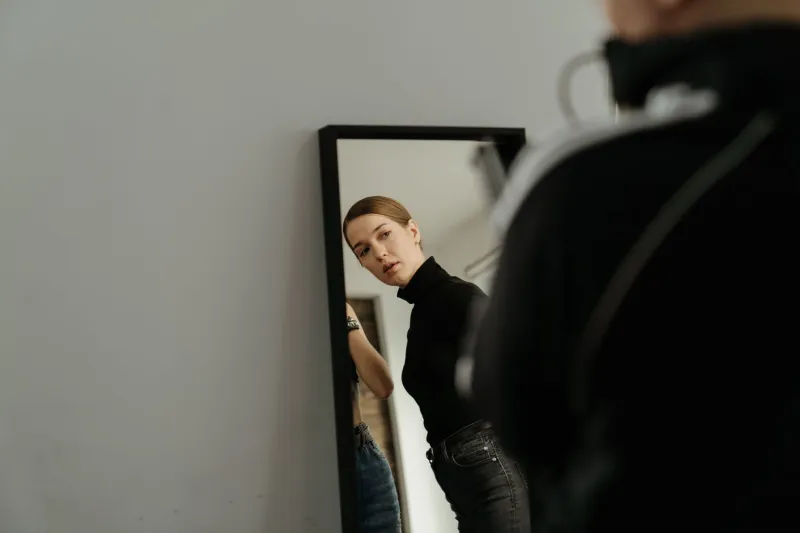
You know the feeling. You're scrolling, minding your business, and then you land on their page. The creator who's doing the exact thing you always said you'd do. The artist whose aesthetic looks suspiciously close to the vision you sketched in a notebook three years ago. The writer who's getting the bylines you told yourself you'd chase.
And instead of feeling inspired, you feel that specific, stomach-dropping kind of sick.
We usually call it jealousy. But jealousy is too simple a word for what's actually happening. What you're feeling isn't really about them at all.
The Mirror You Didn't Ask For
Here's the uncomfortable truth: you don't compare yourself to random people. You compare yourself to people who are living out a version of your unlived story.
That's not a coincidence. That's your nervous system pointing at something unfinished.
When you see someone thriving in a lane that once felt like yours, the pain isn't envy. It's grief. It's the slow, quiet mourning of the person you thought you'd already be by now — the one who took the leap, stayed the course, didn't get talked out of it at the worst possible moment. You're not mad that they have what they have. You're heartbroken that you're not further along in the direction you actually wanted to go.
That's a radically different problem, and it requires a radically different response.
How External Voices Rewrote Your Original Vision
Most creators don't abandon their original vision all at once. It happens in small edits.
Someone tells you your niche is too weird, so you widen it. A mentor says your style is too niche, so you sand down the edges. A platform's algorithm rewards a certain format, so you pivot. A comment section gets loud, so you soften your tone. None of these moments feel like betrayals in real time. They feel like adjustments. Reasonable ones.
But stack enough of those adjustments on top of each other, and one day you look up and realize you've been building someone else's version of your career. The original blueprint — the one that felt electric and a little terrifying — got buried under layers of optimization and approval-seeking.
And then you see someone online doing that thing. The original thing. The unedited, uncompromised version of the idea you once had. And the grief hits like a freight train.
Comparison as a Diagnostic Tool
Instead of running from that feeling or doomscrolling through it, try sitting with a different question: What specifically about this person's work is making me ache?
Get granular. Is it the subject matter? The format? The audience they've built? The way they talk about their work without apologizing for it? The fact that they seem completely unafraid of being misunderstood?
Whatever your answer is — that's data. That's your original creative instinct trying to get your attention through the only channel you've left open: someone else's success.
Comparison, when you stop flinching from it, is actually one of the most honest diagnostics a creator has. It shows you exactly what you've been suppressing. Most people use it to feel bad about themselves. The smarter move is to use it as a map.
The Buried Version of You Isn't Gone
Here's what nobody tells you in the creator space: the person you were before the external voices got loud — before the strategy, the pivots, the chasing-what-works — that version of you didn't disappear. They just went quiet.
And quiet isn't the same as gone.
That original creative instinct is still in there, somewhere underneath the performance and the polish. The vision you had before you knew what an algorithm was, before you understood engagement rates, before you started building for an audience instead of building from a place that actually mattered to you — it's still accessible. It's just been waiting for you to stop outsourcing your creative direction to people who have no stake in your actual story.
Reclaiming it doesn't require a dramatic rebrand or burning down what you've built. It starts with something quieter: going back to the earliest versions of your work and asking yourself what you were actually trying to say before you learned how to say it in ways that would be accepted.
How to Stop Using Their Success as Your Measuring Stick
This is the practical part, and it's not about manifesting your way out of comparison. It's about redirecting the energy.
Step one: name the specific grief. Not "I wish I had their success" — go deeper. "I wish I had followed through on that project in 2021." "I wish I hadn't let that one piece of feedback make me second-guess my whole angle." Specific grief is workable. Vague envy just festers.
Step two: find one thing you edited out. Go back through your old work — old drafts, old notes, old voice memos you never sent to anyone. Find one idea, one aesthetic choice, one recurring theme that you kept cutting. That's probably where the gold is.
Step three: make one thing without asking for permission. Not for an audience. Not for the algorithm. Not even for feedback. Just make the thing that the unedited version of you would have made. It doesn't have to go anywhere. It just has to exist.
The comparison trap isn't a character flaw. It's a signal that you've drifted from something that actually matters to you. The question isn't how to stop comparing yourself to other people. The question is what you're going to do now that you know what you've been missing.
The Real Work Starts Here
Every creator who's doing something genuinely original got there by refusing to let the external noise permanently overwrite their internal signal. That doesn't mean they ignored feedback entirely. It means they learned to tell the difference between input that sharpens their vision and input that dilutes it.
You're not behind. You're not broken. You're not watching someone else live your life.
You're just getting a very clear, very uncomfortable reminder of what you actually care about.
And that's the most useful thing that could happen to you right now.